

How profitable is each job?
How on-point are your estimates?
Are you bidding properly?
Are your costs tied to each job? Do you associate labor to each job?
If not, you're going to stall out as a contractor. But doing all this takes a lot of man hours, organization and a system.
Here at 740 Accounting & Bookkeeping, we come alongside and cleanup your accounting, setup a job costing system and actually do it for you.
Job costing shows the real margin on every project instead of one company-wide guess.
Without it, pricing the next job is a repeat of whatever worked or didn't work last time.
This means that your labor hours can easily get traced to ecah job they're working.
That means you'll have all your materials and inputs tied to the project.
We also ensure that change orders, extra labor and all your expenses are accounted for.
When you get Job Costing and profitabilty tracking setup with our team, you can be more focused on the most profitable work, you can estimate more accurately, and hold your team accountable to timelines and budget.
Nothing get's your business unstuck like implementing job costing...
We need to be frank - amateur bookkeepers, in house admin team and your run-of-the-mill accountants don't have the competency or the time to do this.
This will help your business so much, and if you don't have job costing, you'll struggle to hit the next phase of profitable growth.

Monthly reconciliation catches errors while they're small. A year of unreconciled accounts turns small mistakes into a cleanup project.
A generic chart of accounts lumps these together. Trades businesses need them split out to see what's actually driving cost on each job.

Miscategorized fuel costs and missed IFTA filings lead to overpaid taxes and potential penalties. This is one of the most common gaps in trucking-adjacent trades businesses.
Lenders and bonding companies want reconciled, professional financials, not a shoebox of receipts. Keeping books current means you're ready the moment an opportunity requires financing.
Most trades businesses have an office manager or a spouse handling the books who learned on the job. Proper training, built around how the business actually runs, prevents small errors from becoming a cleanup project down the road.
Even a well-run file benefits from an outside review. A free QuickBooks review catches issues before they compound.
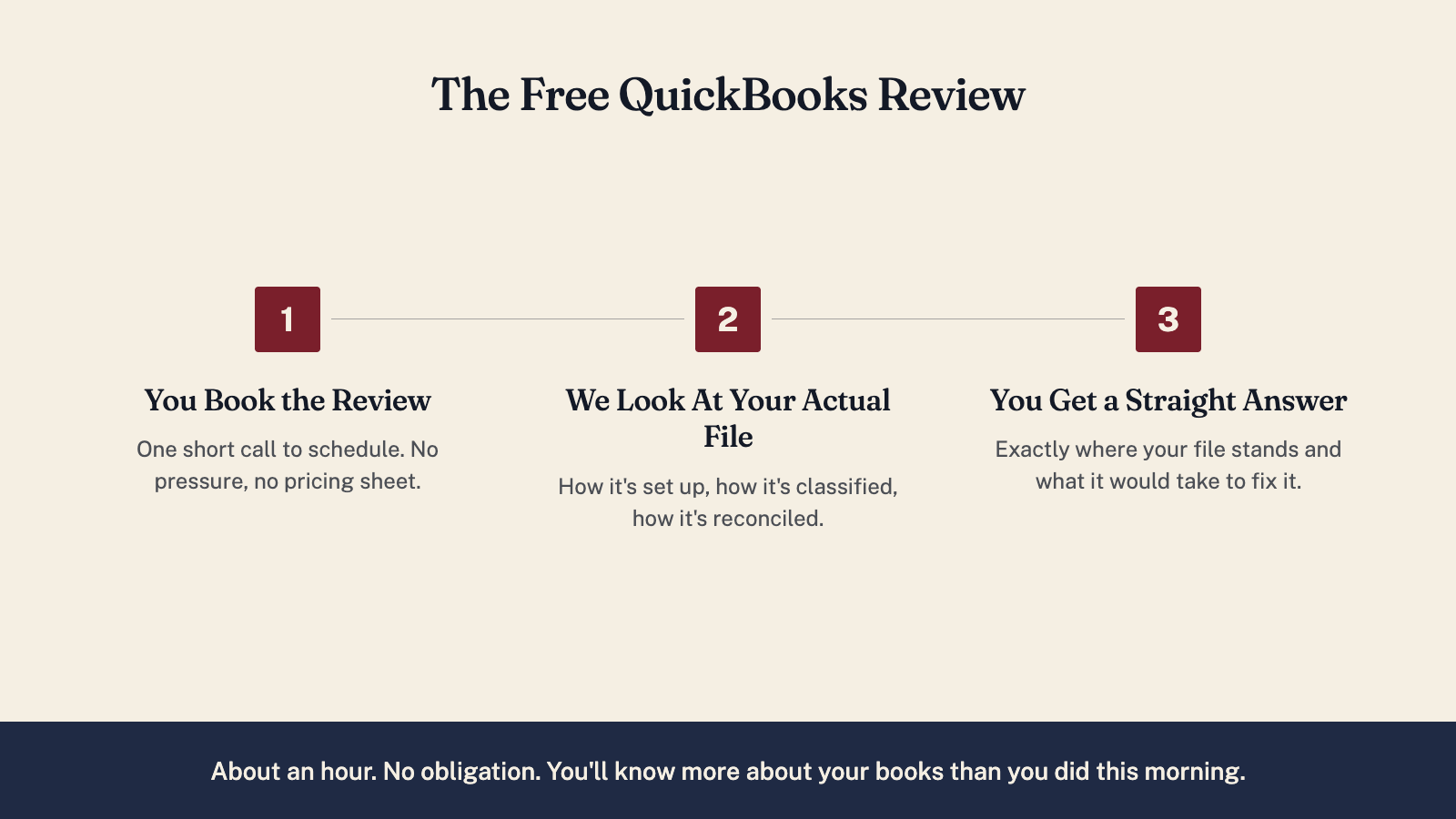
740 Accounting & Bookkeeping specializes in trades bookkeeping across the Ohio Valley. Start with a free QuickBooks review to see where your business stands against these seven moves.
July 1, 2026
Kristal Hunkler