
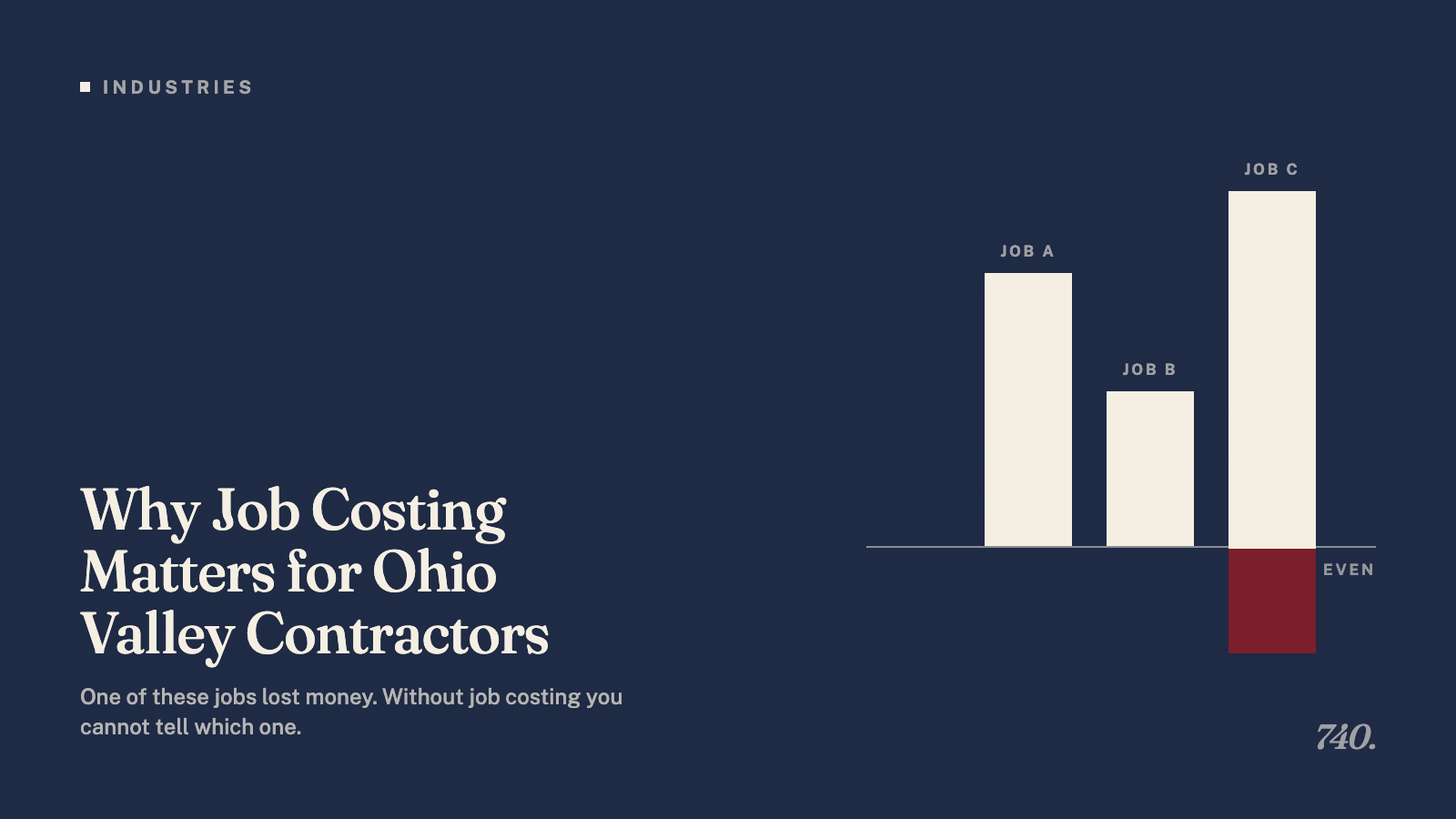
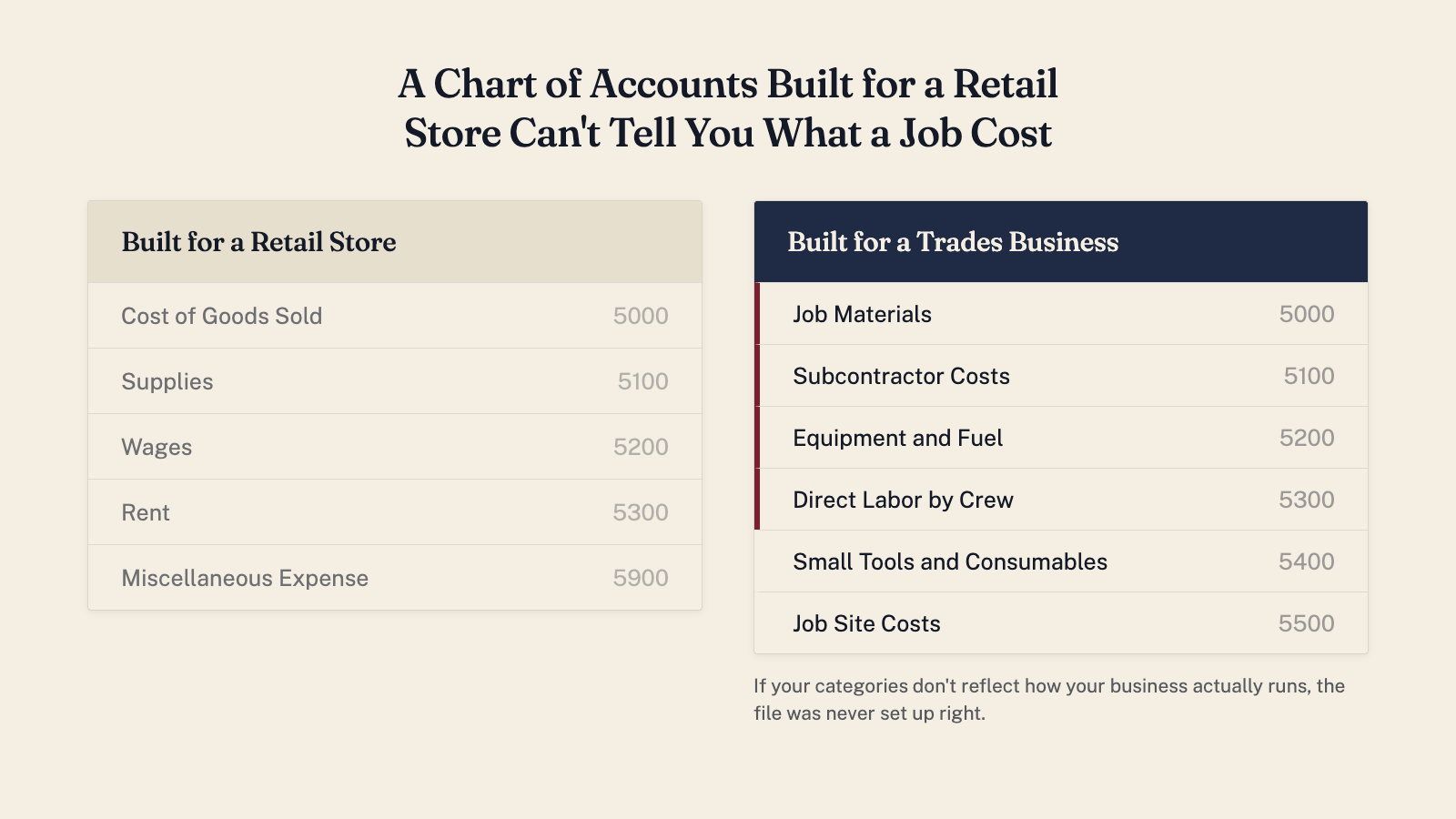
A lot of contractor QuickBooks files were never actually built for a contracting business. They were set up like a retail store or a general office, with one lump 'materials' account and no way to separate one job from another.
That works fine until you need to answer a simple question: did that last job actually make money? Without job costing, you can't answer it. You can only guess.
Job costing breaks your income and expenses down by individual project instead of lumping everything into one general ledger. Materials, labor, subcontractor payments, and equipment costs all get tagged to the specific job they belong to.
Once that's set up correctly in your QuickBooks file, your profit and loss statement stops being a company-wide guess and starts being a job-by-job scorecard.
Without job costing, you're bidding your next contract using the same instincts that may have cost you money on the last one. With it, you know exactly which types of jobs, which crew sizes, and which project sizes are actually profitable for your business.
That's the difference between growing on gut feeling and growing on real numbers.
Contractors across Wheeling, Barnesville, and the surrounding Ohio Valley face the same problem. Seasonal work, subcontractor payments, and bonding requirements all depend on clean, job-level numbers.
740 Accounting & Bookkeeping specializes in setting up job costing correctly inside the QuickBooks file you already have, no starting over required.
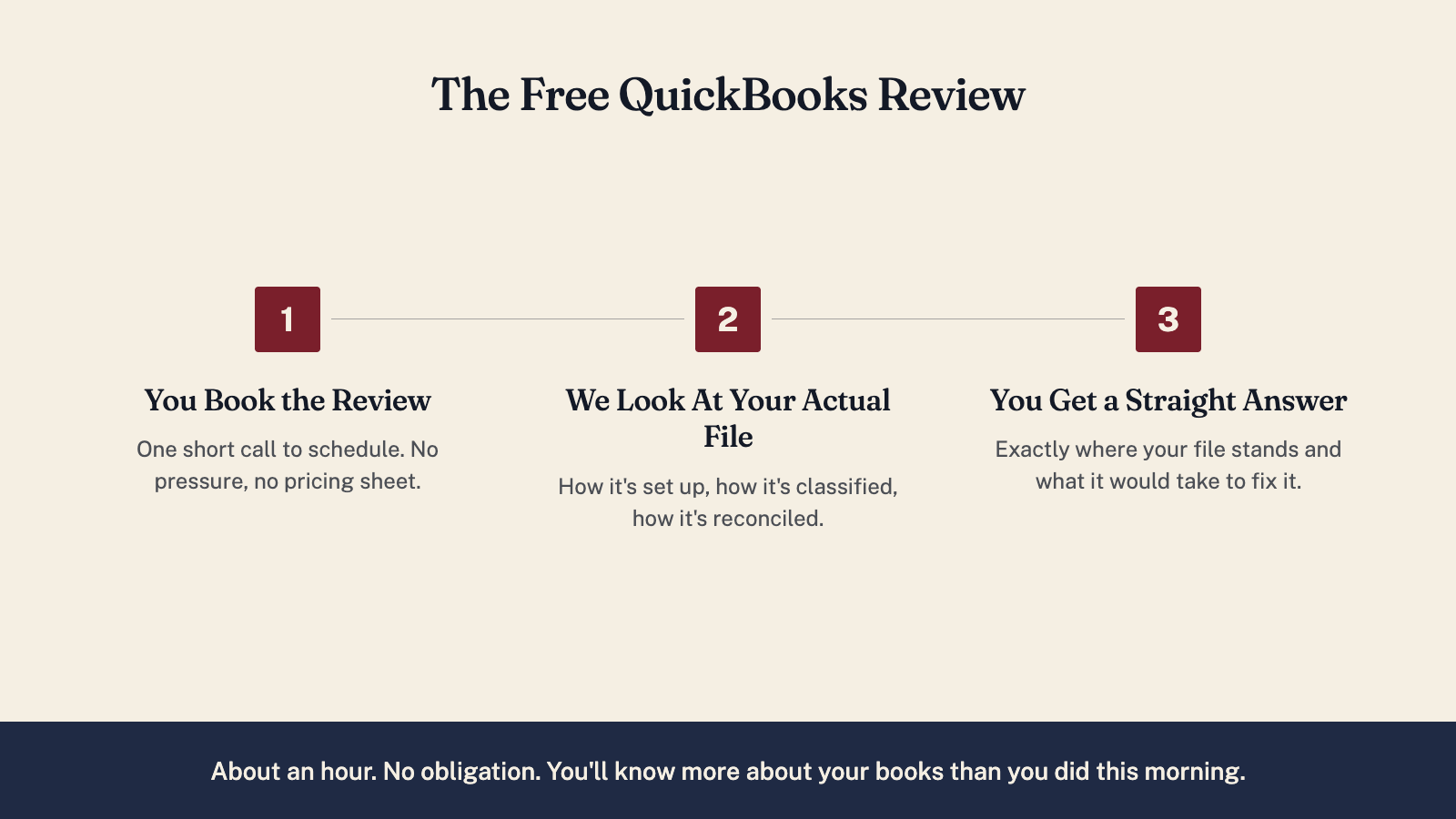
If you're not sure whether your file has job costing set up correctly, a free QuickBooks review will tell you in under an hour, no obligation.
July 1, 2026
Kristal Hunkler